Three Things to Know – Heavy industry fire protection in remote, resource-limited locations demands a fundamentally different approach — adapt international standards to local site conditions rather than force-fitting a developed-market design. – Modular, prefabricated solutions (floating pump platforms, horizontal foam tanks, bolt-together tank assemblies) solve the logistics problem that makes traditional construction infeasible in remote heavy industry sites. – Real case: a heavy oil plant in Africa achieved 20% core system cost reduction by adapting Chinese GB standards — not by cutting corners, by eliminating unnecessary over-engineering baked into developed-market designs.
Unique Fire Risks in Heavy Industry: Mining, Oil & Gas, and Steel
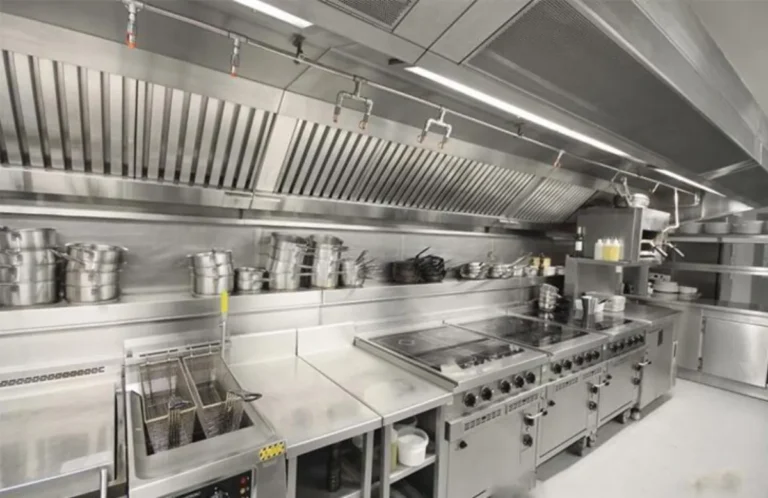
Heavy industry presents fire risks unlike any commercial or residential setting. Mining operations handle flammable fuels and explosives. Oil and gas facilities process hydrocarbons under pressure. Steel plants operate at extreme temperatures with molten materials. Each environment demands fire protection engineered for its specific hazards.
Key distinctions from commercial buildings: – High fire load density: Large volumes of combustible materials (fuels, lubricants, conveyor belts) in concentrated areas. – Process-related ignition sources: Welding, hot work, electrical equipment, friction in rotating machinery. – Confined and elevated spaces: Conveyor galleries, crusher chambers, and tank farms that are difficult to access for both fire detection and suppression. – Water supply constraints: Remote mining and oil sites often lack municipal water infrastructure, requiring dedicated fire pump stations, storage tanks, or alternative suppression agents.
According to NFPA research, industrial and manufacturing properties accounted for an estimated 37,000 reported structure fires per year in the United States alone, with equipment failure as the leading known cause at 31% of incidents. In developing-market heavy industry, where equipment maintenance intervals are longer and ambient conditions harsher, the risk is higher.
Challenges of Fire Protection in Remote and Developing Market Locations
Constructing fire protection systems for heavy industry in Africa, Southeast Asia, or the Middle East presents challenges that go beyond engineering:
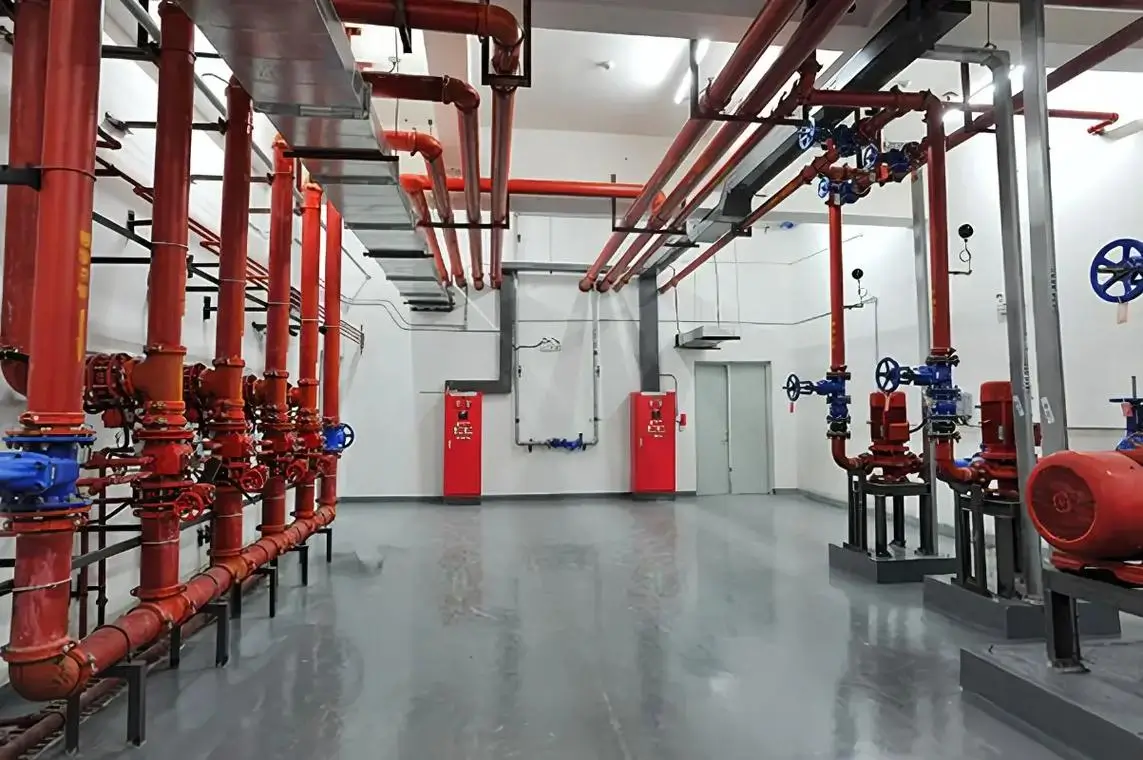
Absence of local codes. Many developing-market jurisdictions do not have comprehensive fire safety regulations for complex industrial facilities. The project team cannot simply “follow local code” — there often is none. The solution: adopt an established international or national standard (NFPA, GB, or BS) as the design baseline and adapt it.
Supply chain constraints. Fire protection components — pumps, valves, foam concentrate, piping — are rarely available locally in remote industrial zones. Lead times for imported equipment can run 12-16 weeks. The design must account for what can realistically be sourced within the project timeline.
Skilled labor shortage. Installation of fire suppression systems requires certified welders, pipe fitters, and commissioning engineers. In remote African sites, these skills must be brought in, housed, and supported. Training local personnel is a project deliverable, not an afterthought.
Knowledge gap. The client — typically a mining or oil company — may not have in-house fire protection engineering expertise. They know their process but not the standards or system design. The fire protection contractor becomes a technical interpreter, translating between codes and field conditions.
Modular Solutions: Floating Pump Platforms and Horizontal Foam Tanks
Standard fire protection designs assume a developed-market construction environment: concrete pump houses, underground piping, and on-site fabrication. In remote heavy industry, these assumptions fail.
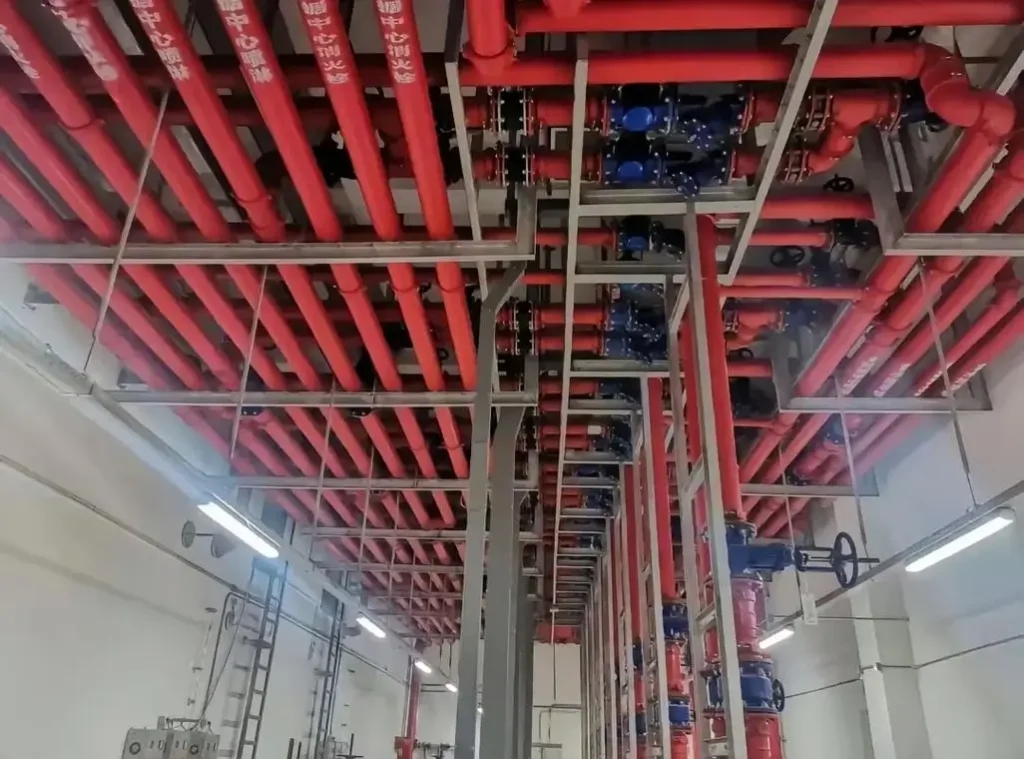
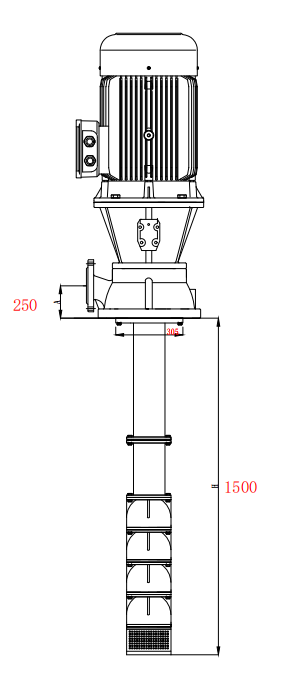
Floating pump platforms. Instead of building a permanent pump house with a concrete foundation, the pump skid is mounted on a steel float structure. The platform is prefabricated, shipped as modules, and assembled on-site with bolted connections. Result: no concrete curing time, no heavy civil works, and the platform can be relocated if the mine or wellhead moves.
Horizontal foam tanks. Traditional foam systems use vertical atmospheric tanks with proportioning systems mounted on a separate skid. For remote sites, horizontal tanks integrated with the proportioning skid reduce footprint, simplify piping, and eliminate the need for a dedicated tank foundation.
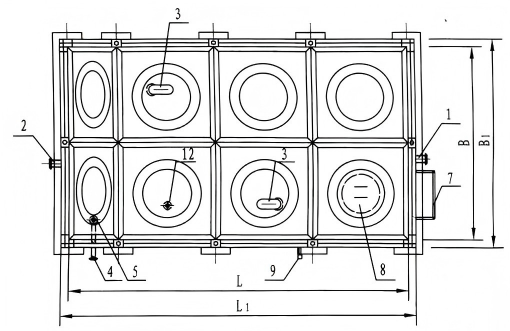
Modular tank assembly. Large water storage tanks are typically field-welded — a slow process requiring certified welders and extensive inspection. Modular bolted tanks (glass-fused-to-steel or epoxy-coated) arrive as pre-fabricated panels and can be assembled in days by semi-skilled labor under supervision.
These modular approaches share a common logic: maximize factory fabrication, minimize field work. The same principle applies to fire pump packages, foam concentrate storage, and control panels.
Balancing International Standards with Local Site Conditions
The starting point for any heavy industry fire protection design should be a recognized standard. For this project, Omnifir adopted Chinese GB standards (GB 50974 for fire water supply, GB 55037 for building fire protection, GB 50084 for sprinkler systems) as the design baseline.
Why GB standards for an African project? Three reasons: – The engineering team had deep expertise in GB standards, enabling faster design and review. – GB standards are performance-based and allow adaptation — unlike prescriptive codes that assume specific construction methods. – GB standards align with Chinese- origin equipment commonly available in African markets, simplifying spare parts and maintenance.
The adaptation process for each standard chapter: 1. Identify prescriptive requirements that assume developed-market conditions (e.g., minimum fire flow rates designed for high-value urban buildings). 2. Re-evaluate based on actual risk — the heavy oil plant in question had a 2,560 m² footprint with specific hazard classification. 3. Accept calculated departures documented with engineering justification. 4. Incorporate NFPA or FM references where GB standards do not cover specific equipment (e.g., foam proportioning per NFPA 11).
This is not “cutting corners.” It is engineering judgment — the same judgment every fire protection engineer applies when adapting a standard to a specific building. The difference is that it must be explicitly documented because there is no local authority to approve it.
Case Walkthrough: Africa Heavy Industry Project
Project parameters: | Parameter | Value | |———–|——-| | Location | Africa (undisclosed heavy oil facility) | | Area | 2,560 m² | | Facility type | Class A industrial (heavy oil processing) | | Standards applied | GB 50974 / GB 55037 / GB 50084, adapted | | Scope | Water supply, foam system, prefabricated tank | | Core system cost reduction | 20% vs conventional design |
The problem. The client was building a high-risk Class A industrial facility in a region without comprehensive fire safety regulations. They had no in-house fire protection engineering capability and needed a turnkey solution that would be insurable, compliant with international lender requirements, and constructible within the local environment.
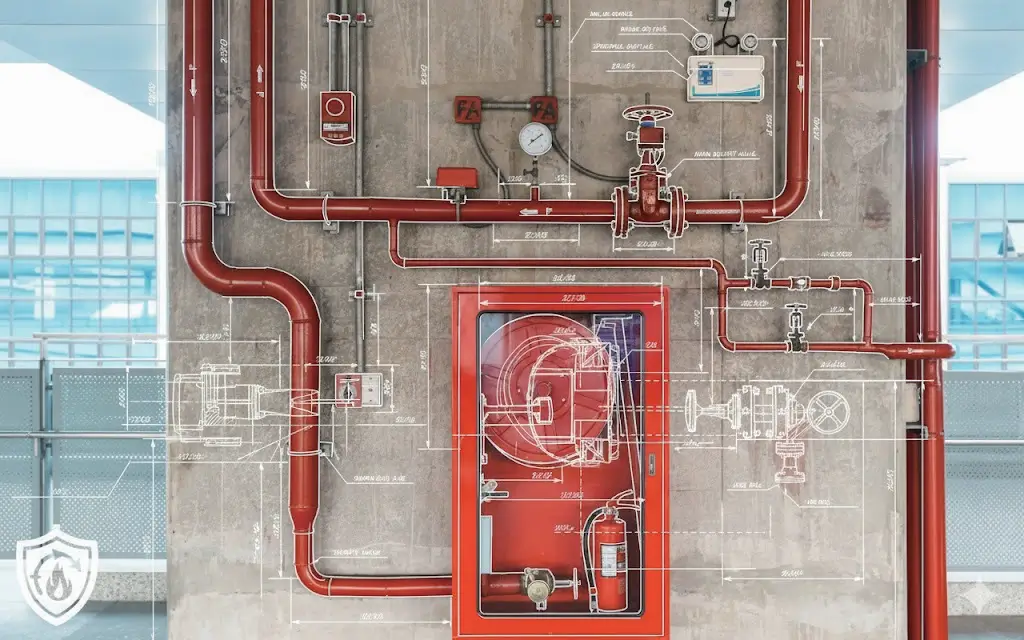
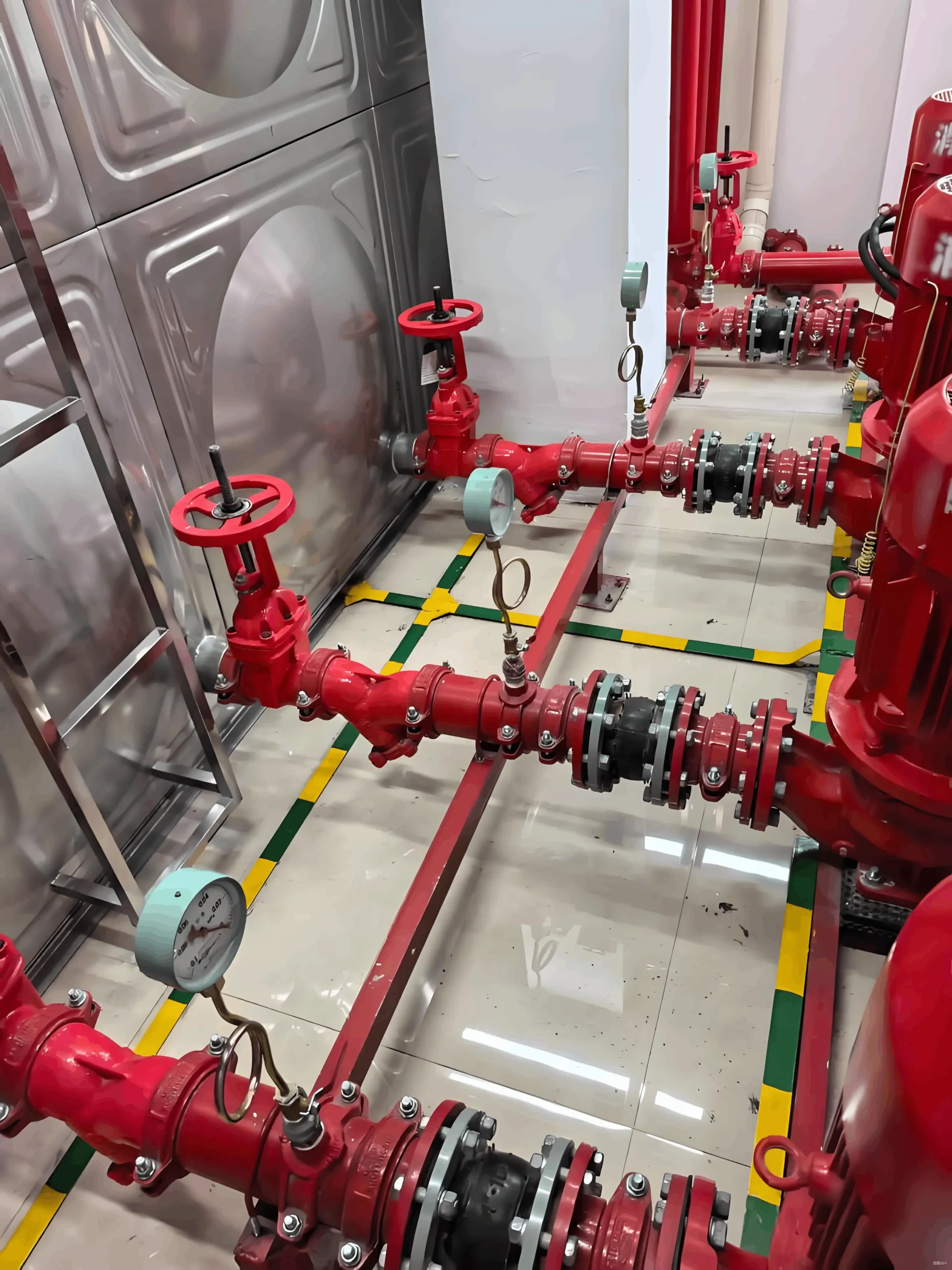
The engineering response. Omnifir acted as the technical bridge, adapting Chinese GB standards to local conditions. The approach centered on “One-Chain” systemization — integrating water supply, foam suppression, and pump room into a single cohesive design rather than treating them as separate subsystems.
Key engineering decisions: – Pump optimization. Rather than oversizing to compensate for uncertainty, the team calculated actual hydraulic demand and sized the pump accordingly, saving approximately 15% on pump station cost. – Foam system re-engineering. The foam proportioning system was reconfigured from a vertical tank + separate skid to an integrated horizontal tank assembly, reducing footprint and installation labor. – Floating pump platform. Eliminated the need for a concrete pump house foundation, saving both cost and construction time.
Result. Core system cost reduced by 20% compared to a conventional “apply developed-market standards without adaptation” approach. The system passed lender technical review and has been in operation without performance issues.
Cost Optimization Through Design Adaptation
The 20% cost reduction in this case came from four sources:
| Source | Contribution | Method |
|---|---|---|
| Pump sizing optimization | ~8% | Actual hydraulic calculation vs rule-of-thumb oversizing |
| Modular construction (floating platform, bolted tank) | ~6% | Eliminated civil works, reduced field labor |
| Foam system integration | ~4% | Combined tank + proportioning skid vs separate components |
| Supply chain optimization | ~2% | Sourced GB-equivalent components vs premium NFPA-listed only |
Cost optimization in heavy industry fire protection does not come from reducing safety margins. It comes from replacing assumptions with calculations, integrating subsystems, and matching the design to actual site conditions rather than applying a template.
Logistics, Installation, and Training for Remote Sites
Delivering fire protection equipment to a remote African heavy industry site means solving for shipping, customs, installation, and local skills, not just picking components.
Source quality control. All components must be inspected and certified before shipping. For this project, Omnifir applied rigorous selection of CE/UL-compatible materials to withstand long-haul shipping and harsh local conditions.
Export packaging. Professional reinforcement and shock-proof packaging. Mandatory fumigation for wooden components to ensure customs clearance.
On-site installation. The modular design philosophy (pre-fabricated platforms, bolted tanks, integrated skids) reduces installation complexity. Most assembly can be performed with bolted connections rather than welding, reducing the need for certified welders at the site.
Local training. Operating a fire suppression system requires knowledge: how to test the foam proportioner, when to replace the agent, what pressure readings indicate a problem. The project included hands-on training for the client’s local maintenance team.
Ongoing support. Remote sites cannot rely on a local service provider. The project included a 7×24 technical response commitment from the original project engineers, accessible via satellite communication links.
Decision Framework: When to Adapt vs Apply Standard
| Condition | Recommended approach |
|---|---|
| Site has mature local codes and certified contractors | Apply local/NFC standard directly |
| Site has codes but supply chain is limited | Apply standard with pre-approved substitutions for listed equipment |
| Site has no local codes but strong engineering support | Adapt international standard with documented engineering judgment |
| Site has no codes and no local engineering capability | Turnkey solution design with adaptation — the approach described in this article |
| Client has lender or insurer requiring specific standard | Adopt that standard as baseline, adapt constructibility |
Frequently Asked Questions
What NFPA standards apply to heavy industry fire protection?
The most relevant standards are NFPA 11 (foam systems), NFPA 13 (sprinklers), NFPA 20 (fire pumps), NFPA 22 (water tanks), and NFPA 72 (fire alarm and detection). For specific industries — mining, oil and gas, steel — NFPA 120, NFPA 30, and NFPA 85 provide additional requirements. The correct standard depends on the facility classification and hazard level.How do you design fire protection when there are no local codes?
Adopt an established international standard as the design baseline — NFPA, GB, or BS. Document every departure from the standard with engineering justification. Submit the design to the client’s insurer or lender for review. Their approval effectively substitutes for local authority approval.Are modular fire protection systems reliable for heavy industry?
Yes. Modular systems (floating pump platforms, bolted tanks, integrated skids) use the same pumps, valves, and controls as conventionally constructed systems. The difference is in the enclosure and assembly method, not the core components. Factory-fabricated systems often have higher quality control because fabrication happens in a controlled environment rather than in the field.What is the typical cost range for heavy industry fire protection in developing markets?
Cost varies significantly by facility size and hazard level. For a mid-size heavy oil facility (2,000-3,000 m²), the fire protection system typically ranges from $150,000 to $400,000 for water supply, foam suppression, and detection. The case study in this article achieved a 20% cost reduction through modular design and standard adaptation.How long does it take to engineer and install fire protection for a remote heavy industry site?
Engineering typically takes 8-12 weeks. Equipment fabrication and shipping add 12-16 weeks. On-site installation ranges from 4-8 weeks depending on site conditions and local labor availability. Total timeline: 6-9 months from engineering kickoff to commissioning.References
- NFPA Research. “Fires in Industrial and Manufacturing Properties.” National Fire Protection Association, Quincy, MA.
- NFPA 11: Standard for Low-, Medium-, and High-Expansion Foam. 2021 Edition.
- NFPA 20: Standard for the Installation of Stationary Pumps for Fire Protection. 2022 Edition.
- GB 50974-2014: Code for Design of Fire Protection Water Supply and Hydrant Systems. China National Standard.
- GB 55037-2022: Code for Fire Protection in Building Design. China National Standard.
- FM Global Property Loss Prevention Data Sheet 8-9: Storage of Class I, II, III, IV and Plastic Commodities.
- International Finance Corporation. “Environmental, Health, and Safety Guidelines for Oil and Gas Development.” World Bank Group.
If You Only Remember One Thing
Fire protection for heavy industry in challenging environments is not about applying a standard. It is about applying engineering judgment — selecting the right standard, adapting it honestly, documenting every departure, and designing for constructibility. The 20% cost saving in this case came from better engineering, not lower standards.