Key Takeaways
—
1. What Are Clean Agent Fire Suppression Systems?
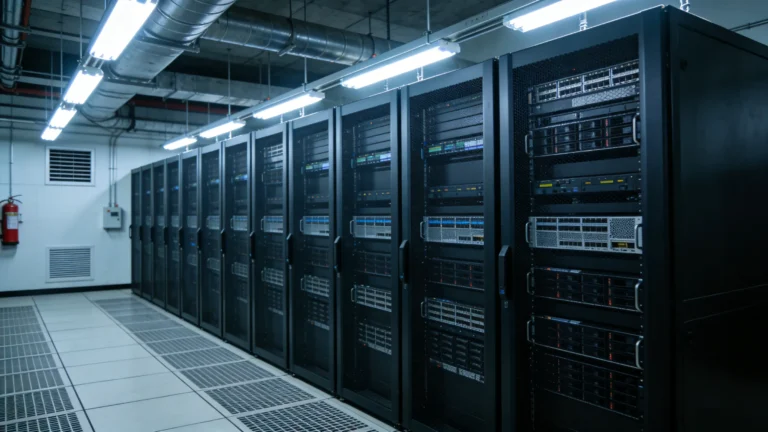
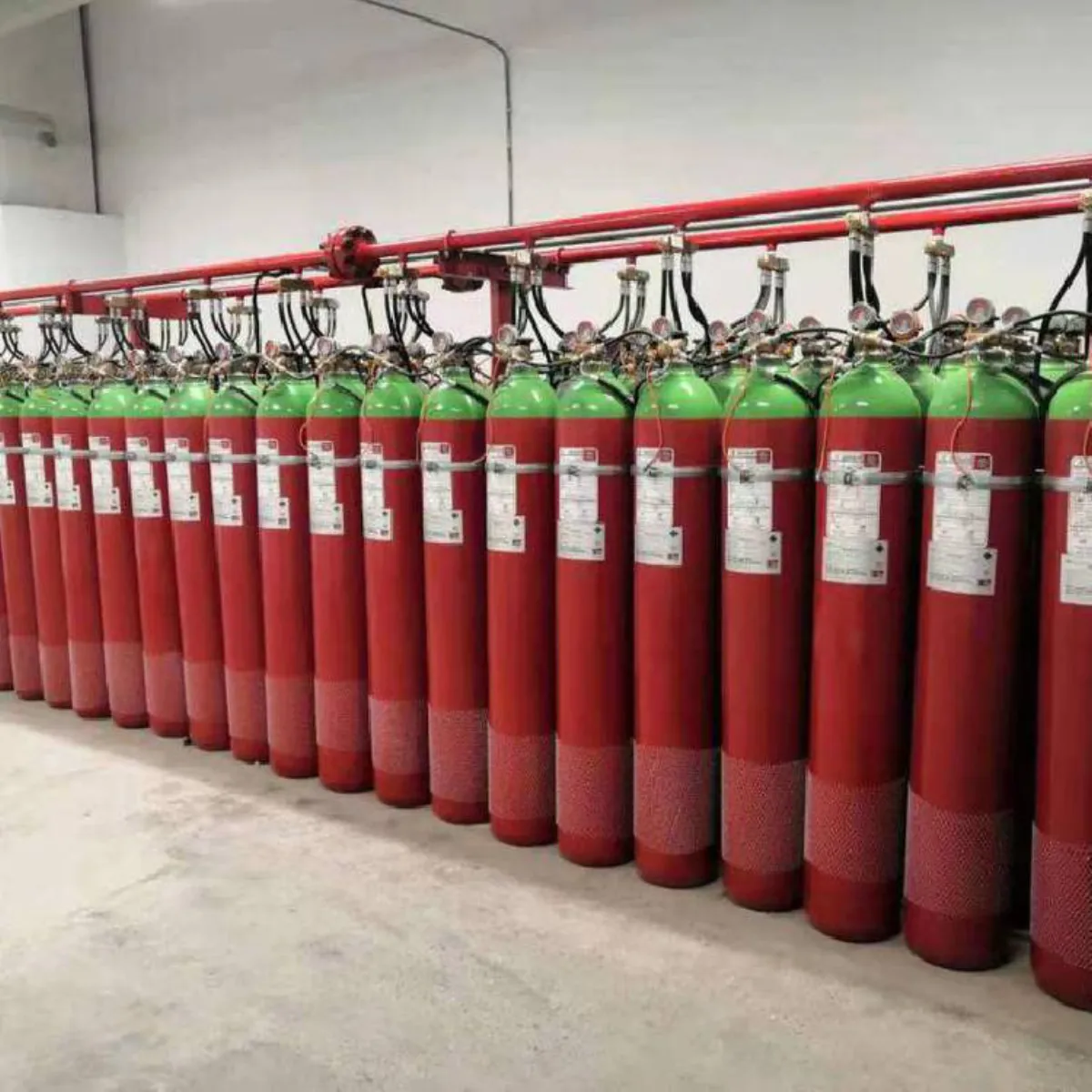
Clean agents are gaseous fire extinguishing agents that leave no residue, are electrically non-conductive, and are safe for occupied spaces at design concentrations. Unlike water sprinklers (which destroy servers) or CO2 (which kills people at extinguishing concentrations), clean agents suppress fire without collateral damage.
Both FM-200 and Novec 1230 work by the same mechanism: they absorb heat from the fire and interrupt the chemical chain reaction of combustion. Neither displaces oxygen. Both discharge in 10 seconds or less. Both protect Class A, B, and C fire hazards.
The difference between them is chemistry, environmental regulation, and cost — and the gap in all three is widening.
—
2. Chemistry: What’s Actually in the Cylinder
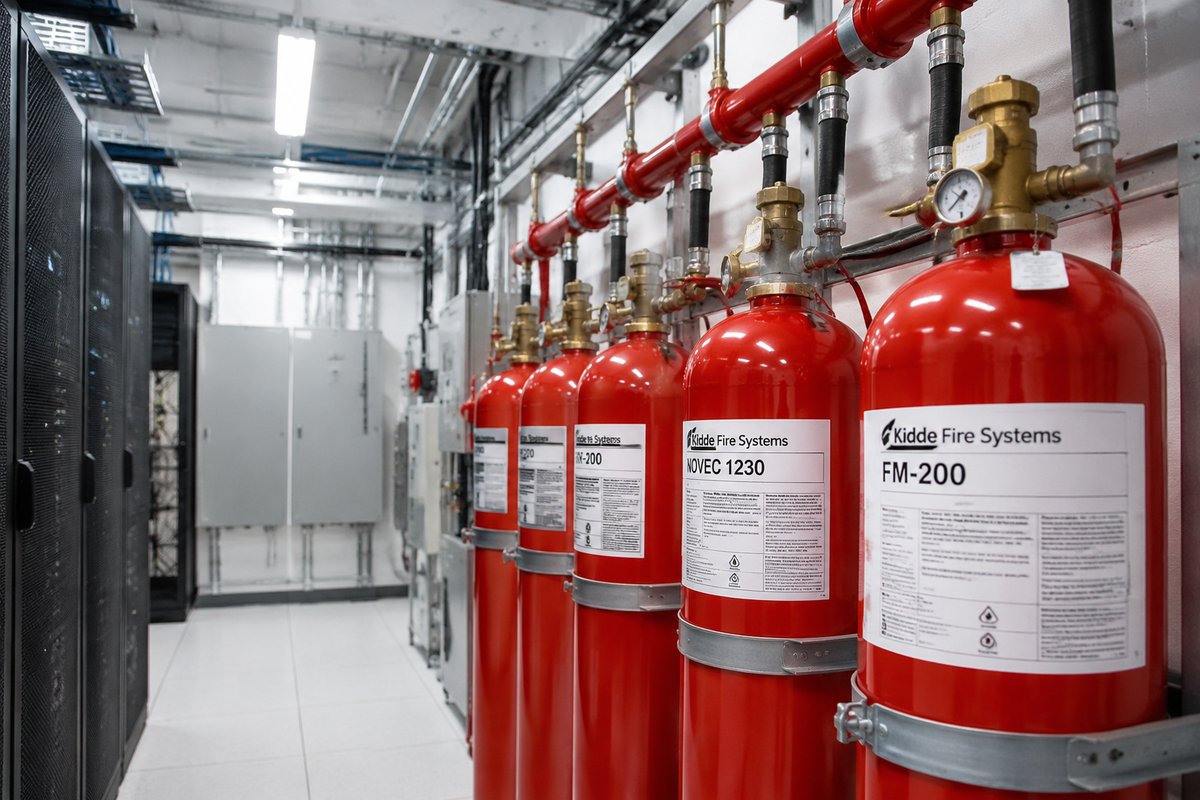
| Property | FM-200 (HFC-227ea) | Novec 1230 (FK-5-1-12) |
|---|---|---|
| Chemical family | Hydrofluorocarbon | Fluoroketone |
| Molecular weight | 170.03 | 316.04 |
| Boiling point | -16.4°C | 49.2°C |
| Storage state | Liquefied compressed gas | Liquid |
| Agent required (per m³, typical) | 0.55-0.65 kg | 0.75-0.85 kg |
| Design concentration | 6.7-8.7% | 4.0-6.0% |
| Cylinder pressure | 25 bar (360 psi) | 25-42 bar |
The practical consequence: FM-200 is heavier per molecule but you need less of it by mass. Novec 1230 is lighter in application but you need more kilograms. This shows up in cylinder count and floor space.
—
3. Environmental Impact: The Gap That’s Growing
This is the single factor driving the industry toward Novec 1230.
| Metric | FM-200 | Novec 1230 |
|---|---|---|
| Global Warming Potential (GWP) | 3,500 | 1 |
| Atmospheric lifetime | 33-36.5 years | ~5 days |
| Ozone Depletion Potential (ODP) | 0 | 0 |
| EU F-Gas Regulation | Phasing down | Exempt |
| US AIM Act (2020) | 40% production cut by 2029, 85% by 2036 | Exempt |
| Manufacturer supports phase-down | Yes (Chemours/DuPont) | Yes (3M) |
What this means in practice: FM-200 production quotas are shrinking every year under the Kigali Amendment to the Montreal Protocol. By 2029 in the US, only 60% of the 2011-2013 baseline production will be allowed. Re-charging an FM-200 system after a discharge in 2030 could mean higher prices or limited availability. Novec 1230 has no such restriction.
If your data center is in the EU, the F-Gas Regulation effectively makes Novec 1230 or inert gas the only new-installation choices. FM-200 can still be serviced and recharged, but new installations are increasingly difficult to permit.
—
4. Performance: They’re Equal Where It Counts
For data center fire suppression, there is no practical performance difference:
The one measurable difference is the safety margin:
| FM-200 | Novec 1230 | |
|---|---|---|
| Design concentration (%) | 6.7-8.7 | 4.0-6.0 |
| NOAEL (No Adverse Effect Level) | 9.0% | 10.0% |
| Safety margin | 0.3-2.3% | 4.0-6.0% |
Novec 1230 has a wider margin between its use concentration and the point where humans might experience effects. In practice this is rarely a deciding factor — both are safe at design concentration — but it matters in tightly sealed, continuously occupied control rooms.
—
5. Space and Storage: The Hidden Cost of Novec 1230
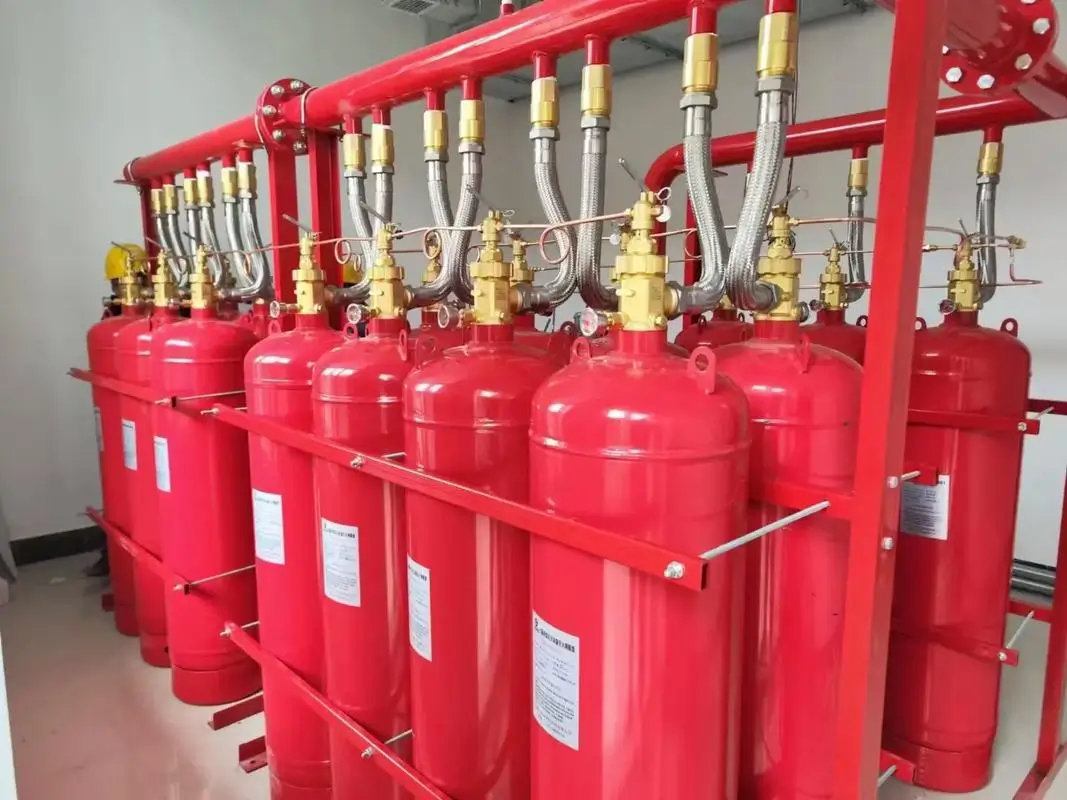
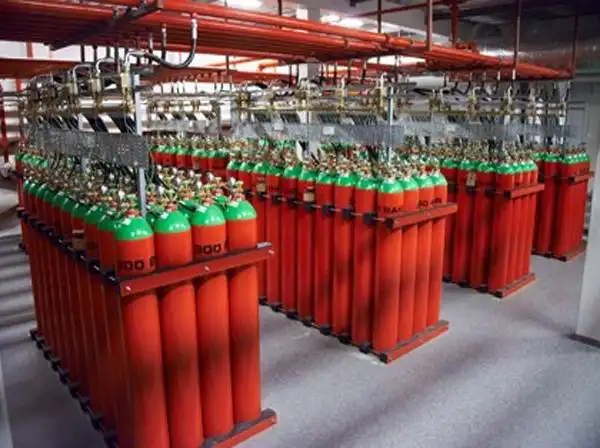
Because Novec 1230 requires roughly 30-40% more agent mass to protect the same volume, you need more or larger cylinders. Example for a 500 m² data center:
| FM-200 | Novec 1230 | |
|---|---|---|
| Agent mass required | ~320 kg | ~450 kg |
| 120L cylinders needed | 3 | 5 |
| Cylinder storage footprint | ~1.5 m² | ~2.5 m² |
This may not sound like much, but in a data center where every square meter of white space costs thousands, the extra cylinder storage matters. This is the hidden cost that offsets Novec 1230’s environmental advantage in tight-footprint installations.
—
6. Cost: Today vs Tomorrow
As of 2026, the cost landscape is shifting:
| Cost element | FM-200 | Novec 1230 |
|---|---|---|
| Agent cost per kg | $40-60 | $60-90 |
| Agent quantity for same space | Less | ~30-40% more |
| Cylinder count | Fewer | More |
| System hardware (valves, nozzles, piping) | Similar | Similar |
| Re-charge after discharge | Lower (less agent) | Higher (more agent + rising cylinder cost) |
| 2029+ re-charge risk | Uncertainty (HFC quotas) | Stable |
Today, FM-200 is typically 15-25% cheaper for an equivalent new installation. The gap narrows when you factor in future re-charge cost and availability risk. For a data center with a 15-year lifecycle, the total cost of ownership may already favor Novec 1230 in regulated markets — and the gap will only widen as HFC quotas tighten.
—
7. Regulatory Landscape: What’s Coming
EU: F-Gas Regulation (EU 517/2014 and 2024 revision) has already driven most new data center projects to Novec 1230 or inert gas. FM-200 service and recharge is still permitted but new installations require justification.
US: The AIM Act (2020) empowers the EPA to phase down HFC production. The proposed schedule targets an 85% reduction by 2036. FM-200 is directly affected.
Asia: Varies by country. China, Japan, and South Korea have ratified the Kigali Amendment with phase-down schedules beginning around 2024-2029. Southeast Asia and the Middle East are generally slower to adopt restrictions — FM-200 remains widely available.
Bottom line: If your data center is in a jurisdiction that enforces HFC phase-down, assume FM-200 will become increasingly expensive to recharge. If you’re in an unregulated market building a new facility today, FM-200 is still the lower upfront investment.
—
8. Decision Table
| Scenario | Recommended Agent | Reasoning |
|---|---|---|
| New build, EU jurisdiction | Novec 1230 | F-Gas Regulation makes FM-200 installation difficult |
| New build, US/Asia, < 500 m² | FM-200 | Cost leader today; re-charge risk manageable for smaller systems |
| New build, large facility (> 2,000 m²) | Novec 1230 | Cylinder count difference narrows at scale; regulatory hedge |
| Existing FM-200 system, need recharge | Stay with FM-200 | No regulatory reason to switch; agent still available |
| Client mandates “green” certification | Novec 1230 | GWP of 1 supports LEED/BREEAM credits |
| Extremely tight cylinder storage space | FM-200 | Requires fewer cylinders per m² |
| Multi-tenant colocation facility | Novec 1230 | Future-proofs against regulatory changes; appeals to EU tenants |
9. Decision Engine
—
10. FAQ
Q: Can I mix FM-200 and Novec 1230 in the same facility?
Yes, but not in the same protected zone. You can protect one room with FM-200 and another with Novec 1230. The piping, nozzles, and control systems are separate per zone.
Q: Does Novec 1230 require different piping than FM-200?
Generally no. Both use Schedule 40 steel or stainless steel pipe. Novec 1230’s higher boiling point means vaporization in the pipe is less of a design concern — reducing some nozzle placement constraints.
Q: What happens to my FM-200 system when the HFC phase-down hits?
You can still operate and recharge it — the phase-down restricts new production, not existing system maintenance. But recharge cost will rise as quotas shrink. No one will force you to decommission a working FM-200 system.
Q: Is Novec 1230 being phased out too?
No. 3M has announced the discontinuation of PFAS manufacturing (including Novec 1230’s supply chain materials), with a planned exit by end of 2025. However, Novec 1230 remains available through other manufacturers and the agent is not being banned — 3M exiting has not triggered a regulatory phase-out like the HFC restrictions on FM-200.
Q: What’s the third option?
Inert gas systems (IG-55, IG-541, Inergen) use nitrogen and argon. They have zero GWP, zero atmospheric lifetime, and zero regulatory risk. The trade-off: much larger cylinder footprint (10-20x more cylinders than FM-200/Novec 1230) and higher pressure piping. For data centers with dedicated gas storage rooms, inert gas is worth evaluating alongside Novec 1230.
—
References
—
Conclusion
FM-200 and Novec 1230 both protect data centers fast, clean, and reliably. The choice today is not about fire performance — it’s about environmental regulation, cylinder storage, and 15-year total cost of ownership. FM-200 is cheaper today. Novec 1230 will be cheaper tomorrow. If your facility has a 15-year lifecycle and operates in a regulated market, the decision has already been made for you.
—
If You Only Remember One Thing
Novec 1230’s GWP of 1 makes it the clean agent that will still be available at a predictable cost in 2035. FM-200’s GWP of 3,500 means it’s being regulated out of new installations. If you’re building a new data center today, the question isn’t whether Novec 1230 costs more upfront — it’s whether your FM-200 system will be rechargeable 10 years from now.